Seedball
Seedball Urban Meadow Mix Seed Bombs ( Wild Flower Tin) - Sow Spring Autumn
Seedball Urban Meadow Mix Seed Bombs ( Wild Flower Tin) - Sow Spring Autumn
Couldn't load pickup availability
Urban Meadow mix
A beautiful mix of native wildflower seeds that are perfect for pollinators. The most hardy of our seed mixes, these wildflowers are ideal for cities, roadsides and built up urban areas.
Urban Meadow is a colour combination of annuals and perennials
(see below for plant details).
Each seed ball contains a mini ecosystem, bursting with a variety of wild native flower seeds.
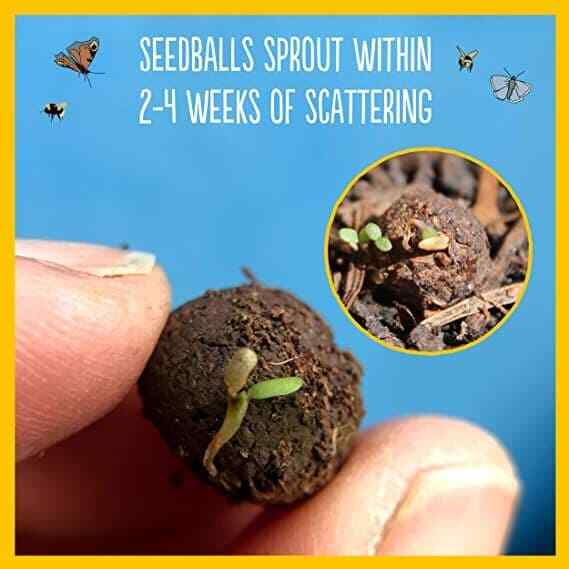
The wildflower seeds are mixed with clay, peat-free compost and a smidgen of chili powder, and rolled into a small ball. Each ball is approximately 1 cm in diameter, making them so easy to just scatter. The dried clay acts as a protective casing from common seed predators (such as ants, mice and birds). When sufficient rain permeates the clay, the seeds inside begin to germinate - helped along by the nutrients and minerals contained within the balls. The chili powder continues to deter predators while the seed ball slowly degrades and the seeds sprout.
Each tin contains 20 seed balls, each with approximately 30 wildflower seeds. These make for lovely gardening gifts, bee and butterfly gifts, eco friendly gifts or mothers day gifts.
What's inside this mix?
Each seed ball contains approximately 30 wildflower seeds for pollinators from a mix of Common toadflax, Cornflower, Cowslip, Meadow cranesbill, Musk mallow, Oxeye daisy and Red campion, plus a sprinkling of pollinator-friendly annuals Chamomile, Cornflower, Corn marigold, and Night-flowering catchfly.
One tin of seed bombs will cover 1 square metre in a garden bed or 3-5 medium sized pots (leave at least 10cm between each ball). Best scattered in Spring or Autumn. See our FAQ page for more details on how to get the best from your seed balls.

Common Toadflax (Linaria vulgaris)
Perennial.
Height: 10-150cm
Flowers: June to October
There is an old belief that when you walk around the flower three times it will remove any spells that have been cast on you!

Cornflower (Centaurea cyanus)
Annual.
Height: 90cm
Flowers: June to August
Cornflowers are edible. They have a cucumber-like taste. Flowers can be consumed in the form of salad and tea, or used as a garnish.

Cowslip (Primula veris)
Perennial.
Height: 20-30cm
Scatter: Late summer or autumn
Flowers: April and May
The origin of the name cowslip is unclear, but it may derive from the fact that it grows in meadows well manured by cow dung or cow slips.

Meadow Cranesbill (Geranium pratense)
Perennial.
Height: 30-70cm
Flowers: June to September
The large purple flowers of Meadow cranesbill turn into pointed, bill-like seed pods that give the plant its common name.

Musk Mallow (Malva moschata)
Description: A tall perennial with large rose pink petals.
Height: 40-70cm
Flowers: June to August
The plant is cultivated for its seeds, which are used in perfumes. The plant also yields a fibre that can be used for clarifying sugar.

Oxeye Daisy (Leucanthemum vulgare)
Perennial.
Height: 30-90cm
Flowers: May to September
In Austria and Germany oxeye daisies were hung inside the house as it was believed they would repel lightning.

Red Campion (Silene dioica)
A perennial with rose pink petals.
Height: 20-60cm
Flowers: March to November
Silenus the merry god of the woodlands in Greek mythology, gave his name to Silene dioica. The second part of its scientific name, dioica, means 'two houses', and refers to the fact that each Red Campion plant has flowers of one sex only, so that two plants are needed to make seeds.
When will they flower?