Seedball
Seedball Butterfly Mix Seed Bombs(British Wild Flower Tin) - Sow Spring Autumn
Seedball Butterfly Mix Seed Bombs(British Wild Flower Tin) - Sow Spring Autumn
Couldn't load pickup availability
Butterfly Mix
WILDFLOWER FOR BUTTERFLIES… This lovely collection of seed mix of mostly blues, pinks and purples is designed to attract butterflies and uses only flowers recommended by Butterfly consservation, helping to support the biodiversity and ecosystem of your garden. (see below for plant details).
Each seed ball contains a mini ecosystem, bursting with a variety of wildflower seeds and others that are native to the UK.
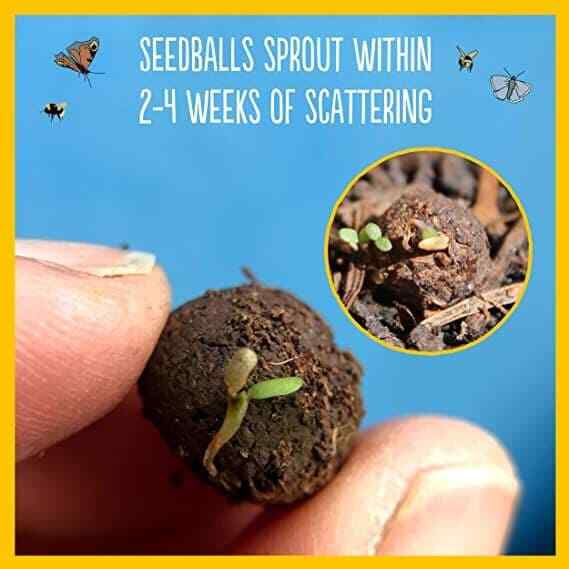
The wildflower seeds are mixed with clay, peat-free compost and a smidgen of chili powder, and rolled into a small ball. Each ball is approximately 1 cm in diameter, making them so easy to just scatter. The dried clay acts as a protective casing from common seed predators (such as ants, mice and birds). When sufficient rain permeates the clay, the seeds inside begin to germinate - helped along by the nutrients and minerals contained within the balls. The chili powder continues to deter predators while the seed ball slowly degrades and the seeds sprout.
Each tin contains 20 seed balls, each with approximately 30 butterfly-friendly wildflower seeds. These make for lovely gardening gifts, butterfly gifts, eco friendly gifts or mother's day gifts. They will work well in window boxes, balcony pots, garden beds and wildlife gardens.
What's inside this mix?
Each seed ball contains approximately 30 wildflower seeds for butterflies from a mix of Purple Loosestrife, Forget-me-not, Musk mallow, Red campion and Yarrow, plus a sprinkling of pollinator-friendly annuals Chamomile, Cornflower, Corn marigold, and Night-flowering catchfly. All recommended as butterfly-friendly plants by the Butterfly conservation trust.
One tin of seed bombs will cover 1 square metre in a garden bed or 3-5 medium sized pots (leave at least 10cm between each ball). Best scattered in Spring or Autumn. See our FAQ page for more details on how to get the best from your seed balls.

Forget-me-not (Myosotis arvensis)
Short annual with blue-grey flowers occasionally interspersed with pink flowers.
Height: 10-40cm
Flowers: April to October
Forget me nots have been used in the past for their astringent properties. The name Myosotis is derivation of the Latin and Greek for mouse and ears.

Musk Mallow (Malva moschata)
Description: A tall perennial with large rose pink petals.
Height: 40-70cm
Flowers: June to August
The plant is cultivated for its seeds, which are used in perfumes. The plant also yields a fibre that can be used for clarifying sugar.

Purple Loosestrife (Lythrum salicaria)
A tall perennial with a spectacular spike of magenta flowers.
Height: up to 150cm
Flowers: June to August
A beautiful ornamental plant well suited to boggy areas.

Red Campion (Silene dioica)
A perennial with rose pink petals.
Height: 20-60cm
Flowers: March to November
Silenus the merry god of the woodlands in Greek mythology, gave his name to Silene dioica. The second part of its scientific name, dioica, means 'two houses', and refers to the fact that each Red Campion plant has flowers of one sex only, so that two plants are needed to make seeds.

Yarrow (Achillea millefolium)
A perennial aromatic herb with white flowers arranged in a many flowered flat umbel head.
Height: 8-60cm
Flowers: June to August
Yarrow is a common herb that has been highly regarded for its medicinal properties in Britain since Anglo-Saxon times, it is said that Achilles used this herb to treat the wounds of his soldiers. Yarrow's pretty little flowers, usually white but can be pink, cluster together in tight groups to resemble flat umbrellas. The leaves are like feathers and are aromatic if crushed. Can be found in many grassland habitats including, waste land and some coastal dunes and stable shingle.